
Hack your marketing workflows
There are enough marketing tools now that can help hack your workflows, allowing you to work smarter and not harder.
Your LinkedIn feed is probably filled with the latest trends, new social media channels to join, and “must-do” marketing hacks.
There are endless updates, so much so that we enough to fill our Marketing Impact blog and live webinar every month. However, without a focused marketing strategy that is guiding you towards your goals, you won’t know what’s noise and what updates you should actually action.
Fundamentals of a Marketing Strategy
Know Your Business So You Can Know Your Audience
Before you even think about channels or content, you need to understand two critical things:
Your Business
What are your core values? What’s your unique selling proposition (USP)? What are your long-term business objectives? Your marketing strategy must be inextricably linked to these fundamental business goals. If the business aims to expand into a new market, your marketing needs to pave the way. If the goal is to increase customer retention, your strategy should reflect that.
Your Audience
Who are you trying to reach? What are their pain points, aspirations, and behaviours? Building detailed buyer personas is non-negotiable. The more deeply you understand your audience, the more effectively you can tailor your messaging, choose your channels, and create truly resonant experiences. Don’t assume; research. Conduct surveys, analyse data, and talk to your customers.
SMARTER Targets
"Increase brand awareness" is a noble goal, but it's unmeasurable
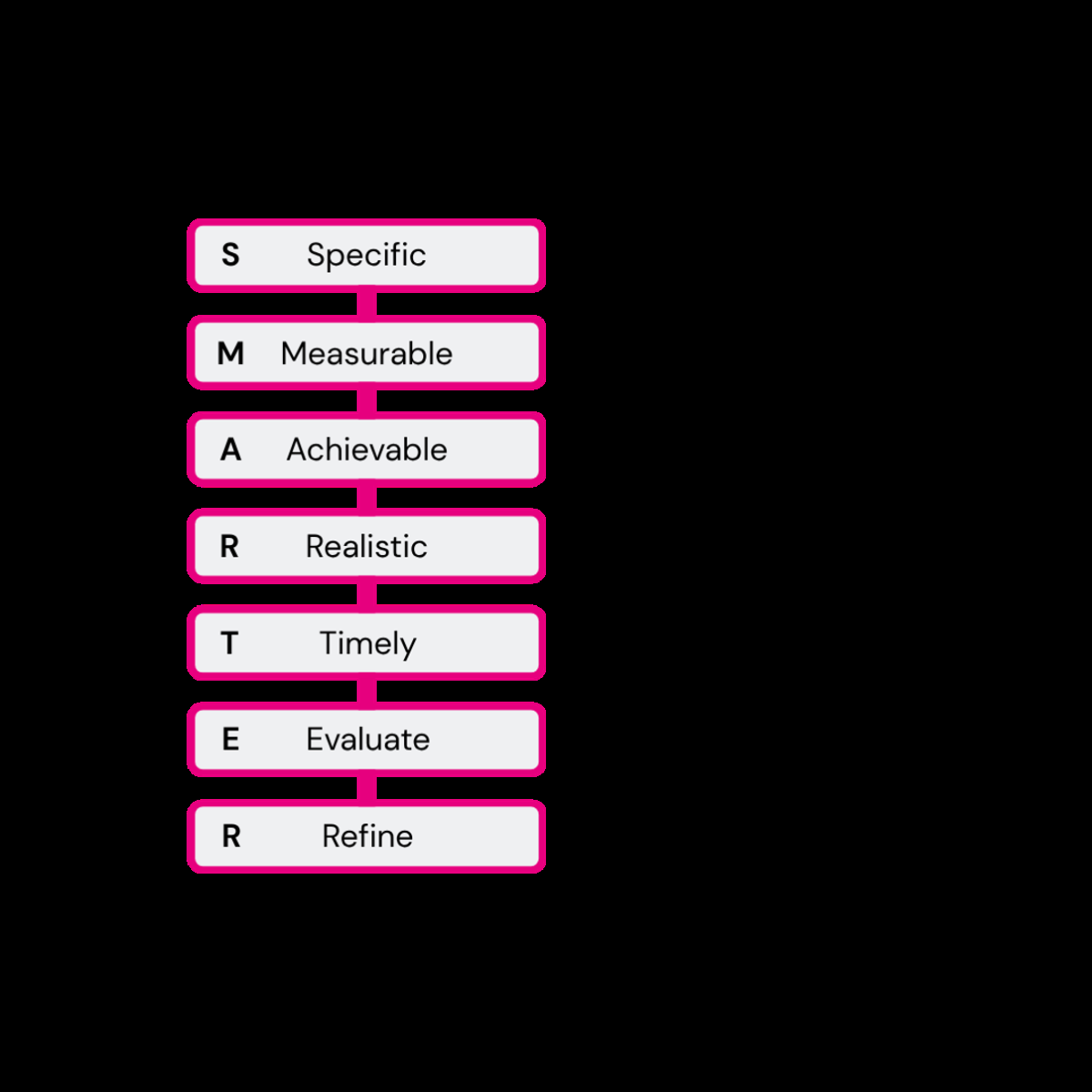
A SMARTER target builds upon the well-known SMART goal-setting framework by adding two crucial elements.
SMART stands for:
Specific: Clearly defined and unambiguous.
Measurable: Quantifiable, so you can track progress and know when the target has been met.
Achievable: Realistic and attainable, even if it stretches you a little.
Realistic: Meaningful and aligned with your broader objectives or vision.
Timely: Has a clear deadline or timeframe, creating a sense of urgency.
The "ER" in SMARTER typically adds:
Evaluate: This means regularly reviewing your progress towards the target. Continuous assessment allows for adjustments.
Refine: Based on your evaluation, make necessary changes to your approach or even the target itself if circumstances have changed or you've learned something new. This makes the goal-setting process dynamic and adaptable.
Tools To Help Develop Your Strategy
Now comes the exciting part… choosing the specific tactics and channels that will help you achieve your objectives. Although exciting, this part can also seem a bit overwhelming, but don’t worry, there are plenty of tools to help you build your strategy.
Google Analytics
Google Analytics (GA4) is a powerful tool for crafting a data-driven marketing strategy, helping you understand your audience, optimise your website, and measure the effectiveness of your campaigns. Here’s how it can help:
- Understanding Your Audience
- Optimising Your Website and User Experience
- Measuring Campaign Effectiveness and ROI
Google Search Console
Google Search Console (GSC) is an indispensable, free tool from Google that provides direct insights into how your website performs in Google Search. While Google Analytics focuses on user behaviour on your site, GSC focuses on how your site appears in search results and how Google crawls and indexes it. This makes it crucial for crafting an effective SEO (Search Engine Optimisation) and content marketing strategy.
Here’s how Google Search Console can help you craft a marketing strategy
- Understanding Search Performance (SEO Insights)
- Website Health and Technical SEO
- Content Strategy and Link Building
Dragon Metrics
We LOVE this tool. It is probably our most used tool. This is an all-in-one digital marketing platform that offers a vast array of tools to help you craft and refine a comprehensive marketing strategy. It’s particularly strong in SEO, competitor analysis, content marketing, PPC, and social media. Here’s how SEMrush can assist:
- SEO Strategy:
- Keyword Research:
- Technical SEO & Site Health:
- Backlink Analysis & Link Building:
- Rank Tracking (Position Tracking): Monitor your website’s daily keyword rankings for specific keywords and locations, allowing you to track the effectiveness of your SEO efforts and react quickly to ranking fluctuations.
- Content Marketing Strategy:
- Topic Research: Quickly generate content ideas based on broad topics, showing popular subtopics, related questions, and headlines that perform well. This helps you create content that truly resonates with your audience.
- Content Audit: Analyse your existing content to identify opportunities for updates, consolidation, or removal based on performance data (traffic, backlinks, shares).
- SEO Content Template & SEO Writing Assistant: Get recommendations for creating SEO-friendly content based on top-ranking competitors for your target keywords. This includes advice on text length, readability, keywords to include, and ideal tone of voice.
- Post Tracking: Monitor the performance of your articles and content pieces, tracking their social shares, backlinks, and keyword rankings.
- Competitor Analysis:
- Domain Overview: Get a high-level snapshot of any competitor’s online performance, including organic and paid traffic, top keywords, and backlink profile.
- Traffic Analytics: Estimate a competitor’s total website traffic, traffic sources (organic, paid, social, referral, direct), audience behaviour, and engagement metrics. This provides a deep understanding of their overall digital strategy.
- Advertising Research: See your competitors’ PPC keywords, ad copies, and estimated ad spend. This is invaluable for optimising your own paid search campaigns and identifying profitable keywords.
- Social Media Tracker: Monitor competitors’ social media activity, including their top-performing content, engagement rates, and audience growth. This helps you identify successful strategies and spot opportunities.
Keyword Planner
Google Keyword Planner, a free tool available within Google Ads, is primarily designed to help advertisers build and plan Google Ads campaigns. However, its robust keyword research capabilities make it an invaluable asset for crafting a broader digital marketing strategy, encompassing both paid and organic efforts.
Here’s how Google Keyword Planner can help you craft a marketing strategy
- Discovering New Keywords & Content Ideas
- Understanding Search Volume & Trends
- Assessing Competition & Bidding (Primarily for PPC)
Choosing the Right Mix
Your choice of digital marketing tools should align with your business goals, budget, and specific needs. Here are some considerations to help you make informed decisions:
- Budget: Paid tools like SEMrush and Ahrefs offer advanced features, but they come at a cost. Assess your budget and consider whether the investment is justified based on your objectives.
- Niche Focus: Each tool has its specialty. Determine which aspects of digital marketing are most critical for your business (e.g., SEO, social media, content creation) and prioritise tools accordingly.
- Scaling Needs: If your business is rapidly growing, it might be worth investing in comprehensive paid tools that can support your expansion. Smaller businesses, on the other hand, may find free tools sufficient for their current needs.
- Ease of Use: Consider your team’s familiarity with the tools. User-friendly tools like Canva and Hootsuite can be adopted quickly, while more advanced tools may require training.
- Integration: Assess whether the tools can integrate seamlessly with your existing software stack. Compatibility can save time and streamline your workflow.
Develop A Marketing Strategy
The world of digital marketing is dynamic, and the right set of tools can be a game-changer for your campaigns. As you navigate the digital landscape, these tools will empower you to make data-driven decisions to build your digital marketing strategy, optimise your online presence, and achieve your marketing goals.